Top Marketing Strategies for Wellness Businesses in 2027: What's Changed Since 2025
Introduction
Picture this. You open the studio at 6 a.m., see clients back to back, and finally sit down at 9 p.m. to post something on Instagram. Your mind goes blank. You post a photo of a candle and call it a day.
If that sounds familiar, you're in good company. Most wellness owners got into this work to help people feel better, not to become full-time marketers.
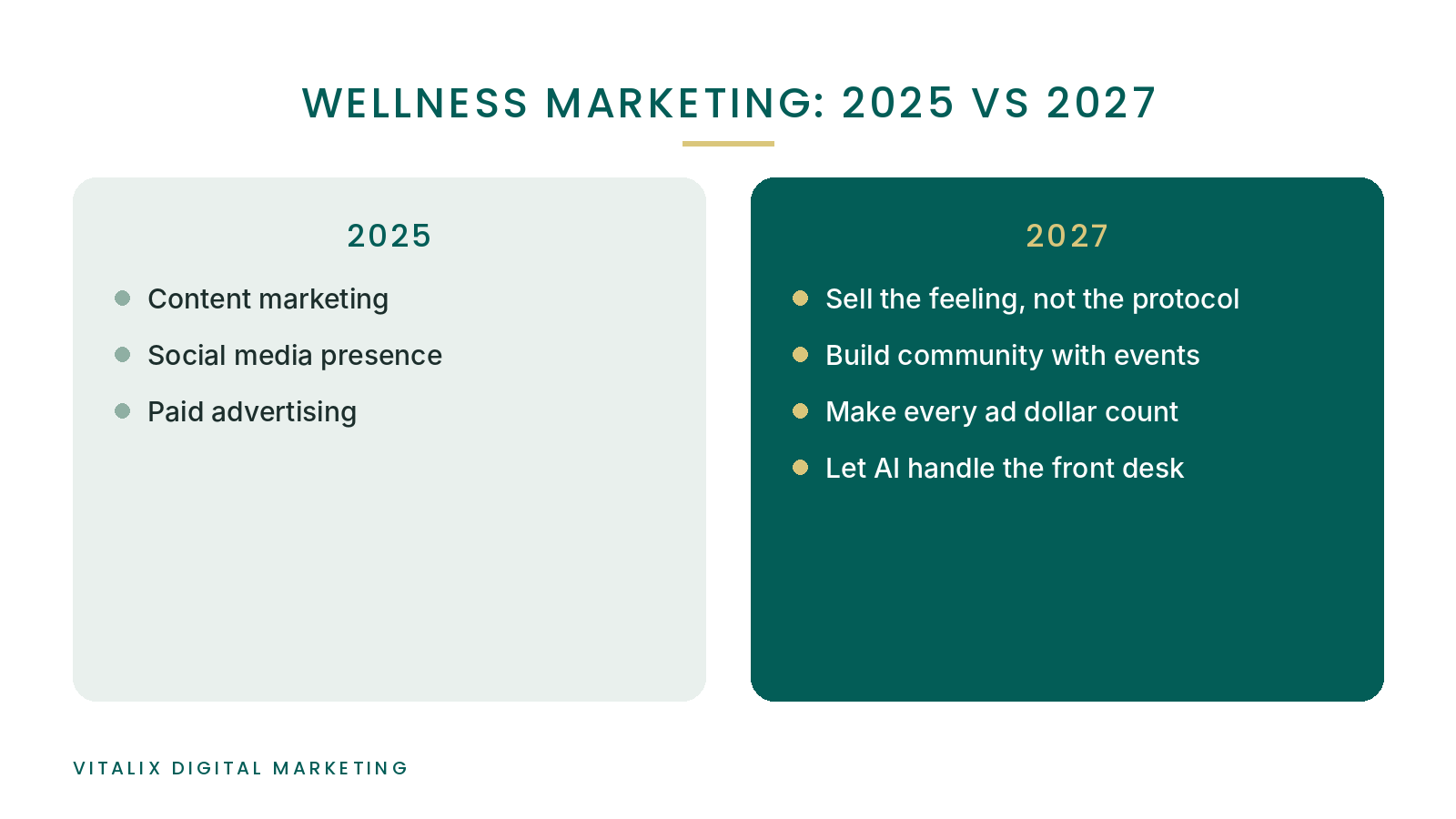
In early 2025, we shared our Top Marketing Strategies for Health and Wellness Brands in 2025. It became one of our most-read posts, and it was built on three strategies: content marketing, social media and paid advertising.
All three still matter. But a lot has changed in two years: what wellness clients want, what ads cost and how fast people expect an answer. So here's the 2027 update, with each strategy refreshed and one new one we couldn't leave out.
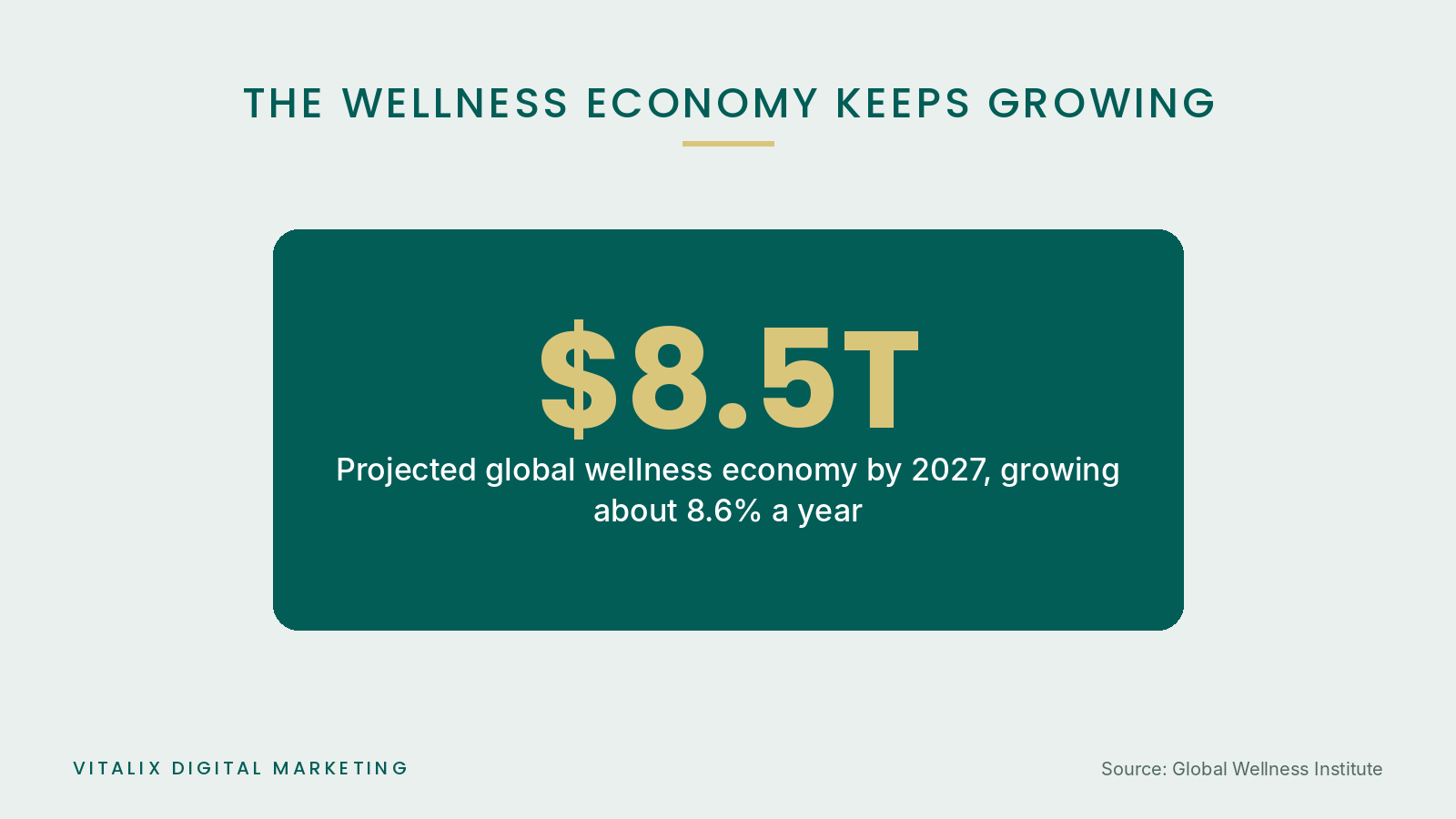
The opportunity is still huge. The Global Wellness Institute projects the global wellness economy will reach $8.5 trillion by 2027, growing about 8.6% a year, with mental wellness among its fastest-growing areas.
What's changed since 2025
- Clients are tired of being optimized. The Global Wellness Summit's 2026 trends report calls it the over-optimization backlash. After years of tracking steps and sleep scores, people want care that helps them feel safe, rested and human.
- Wellness is becoming social. The Summit also points to the "festivalization" of wellness: sound baths, sober dance nights and community events instead of strict routines done alone.
- Calming the nervous system is mainstream. Neurowellness, or caring for the nervous system, has moved from niche to everyday language.
- Ads cost more. Meta reported its average price per ad was up 12% year over year in early 2026, so the same budget reaches fewer people.
- People expect answers at all hours. In a 2025 Zenoti survey, 63% of salon and spa-goers said they're more likely to choose a business that offers help outside normal hours.
1. Content marketing: sell the feeling, not the protocol
In 2025, we said content was the foundation for reaching wellness clients. That's still true. What's changed is what people want to read.
With clients tired of being optimized, the content that lands now is about how they'll feel. Instead of "60-minute deep tissue with trigger point therapy," try "An hour where nobody needs anything from you." Blog posts about stress, burnout, sleep and rest help you show up in the searches people are already making.
Content that works in 2027. The formats from 2025 still earn their place, with a fresh angle:
- Blog posts that answer the questions clients are already searching.
- Short videos of real sessions and calm moments, not just polished promos.
- Infographics that make a simple tip easy to save and share.
- Client success stories, shared with permission, about how people felt.
- A monthly newsletter that keeps you top of mind between visits.
Pro Tip: Write in the words your clients use when they're struggling, not the words you learned in training. "Can't switch off at night" will reach more people than "nervous system dysregulation."
2. Social media: from posting to community
Our 2025 advice was to show your personality and share helpful tips on the right platforms. In 2027, the businesses winning on social aren't just posting. They're gathering people.
Events are now your best social content. A monthly community night, a sound bath, a bring-a-friend class or a seasonal open house gives people a low-pressure way to try you, and gives your regulars something to share and invite others to.
Choose your platforms on purpose. You don't need to be everywhere. Instagram and TikTok still reach younger clients through short videos and stories. Pinterest is where people look for inspiration, like self-care routines and gift ideas. LinkedIn works well if you offer corporate wellness or workshops for teams. Pick one or two and show up consistently.
Pro Tip: Post the experience, not just the service. A short video of a full, laughing room after your community night will do more than a graphic listing your prices.
3. Paid advertising: make every dollar count
In 2025, we called paid ads a source of quick wins. They can still work, but with ad prices rising, every click costs more, so what happens after the click matters more than ever.
Send ad traffic to a page that makes booking easy. Capture an email or phone number so you can stay in touch without paying to reach the same person twice. And retarget people who visited but didn't book.
Where to advertise. Google Ads reach people actively searching for "massage near me" or "yoga classes Edmonton." Facebook and Instagram ads help new people discover you. Retargeting reminds visitors who looked but didn't book.
Personalize the message. A new mom, a busy executive and a retiree want different things from the same massage. Ads that speak to one specific need, like "Tight shoulders from too many hours at a desk?", outperform ads that try to speak to everyone.
Pro Tip: Before you increase your ad budget, fix your follow-up. Doubling ad spend into a slow reply or a confusing booking page just doubles the leak.
4. New for 2027: let AI handle the front desk
This is the strategy that didn't exist in our 2025 guide, and it may make the biggest difference.
You can't answer the phone mid-session. A message that comes in at 10 p.m. often gets booked somewhere else by the time you reply. Today, an AI Chatbot can answer common questions and share your booking link at midnight, an AI Receptionist can pick up when you're with a client, and a CRM can send rebooking reminders and review requests on its own.
Pro Tip: Start with rebooking reminders. A friendly text 30 or 45 days after a visit ("Time for a little you-time?") is the easiest win most wellness businesses can get.
Why work with a marketing partner who knows wellness?
Wellness marketing has its own language. Clients are trusting you with how they feel, so the tone has to be warm, honest and never pushy. A partner who understands that can save you months of trial and error.
At Vitalix, we work with wellness practitioners, spas, studios and health-focused brands. We meet with clients monthly to plan campaigns month by month, then build the content, social media, advertising, CRM and AI systems that bring those plans to life. You stay focused on your clients, and we make sure new ones can find you.
8 campaign ideas for wellness businesses in 2027
Pick two or three that fit your business and your energy.
- "New Year, No Pressure" in January. A gentle reset package for people already burned out before the year starts.
- Bring-a-friend month in February. Give your regulars an easy reason to invite someone.
- A monthly community night. A sound bath, a sober social or a restorative class with tea after.
- Seasonal reset series. Spring and fall are natural times to check in with your body.
- Rebooking reminders. Automatic, friendly and personal.
- Gift cards before every gifting season. Mother's Day, the holidays and Valentine's Day.
- Client stories, shared with permission. How someone felt is more persuasive than any ad.
- A Google review drive. Ask at the right moment, with a simple link.
Frequently asked questions
What's the best marketing for a small wellness business in 2027? Word of mouth is still the strongest, so make it easy: bring-a-friend offers, reviews and events your regulars want to invite people to.
Do paid ads still work for wellness businesses? Yes, but they cost more than they did in 2025. Pair them with easy booking and good follow-up so you're not paying for clicks that go nowhere.
Do I need a website if I have Instagram? Yes. Instagram can change its rules overnight. Your website and booking system are the parts of your marketing you actually own.
How do I market wellness without feeling salesy? Talk about how people feel, share real stories and invite people to experience you through events. That's not selling; it's sharing.
Keep reading
- Top Marketing Strategies for Health and Wellness Brands in 2025
- SEO for Wellness Clinics
- Personalization in Wellness Marketing
- Calendar Event Wins for Wellness Businesses
Explore our services: AI Chatbot · AI Receptionist · Leads Toolkit CRM
Sources
- Vitalix Digital: Top Marketing Strategies for Health and Wellness Brands in 2025
- Global Wellness Institute: Global Wellness Economy Monitor
- Global Wellness Summit: The Future of Wellness 2026 Trends
- Broadway News: Why the cost of digital advertising is rising (Meta Q1 2026 earnings)
- Zenoti: Salon booking survey data
Ready for a calmer, fuller calendar?
You give so much to your clients. Your marketing shouldn't drain what's left. At Vitalix Digital Marketing, we help Edmonton and Alberta wellness businesses with websites, CRM and automation, and AI tools that keep clients coming back, so you can focus on the work you love.
Not sure where to start? Book your free Digital Health Check and we'll show you exactly where your online presence is helping and where it's holding you back.
Let's make 2027 your best year yet!


About the author
Monica Habersack is the owner of Vitalix Digital Marketing in Edmonton, Alberta. She helps small businesses grow with websites, CRM and automation, and AI-powered tools that save time and win more clients. With a background in customer research during a major marketing and digital overhaul at an international brand, Monica brings a practical, people-first approach to digital marketing.





















About Vitalix Digital
We help small and medium- sized businesses grow with strategic marketing, high performing websites, and lead generation systems that actually work.
Free Resources

Website Examples