

What Happens After Someone Fills Out Your Contact Form?

I asked a client this question once and watched them go quiet: "What actually happens the moment someone hits submit on your contact form?"
They didn't know. Not exactly. Somewhere between "an email probably goes somewhere" and "I check my inbox when I remember to," the honest answer was: nothing reliable.
That gap — the space between a lead raising their hand and a real human responding — is where more coaching and consulting business gets lost than almost anywhere else in the funnel. You spent money and effort getting someone to that form. What happens next decides whether that effort was worth it.
1. The Silent Void
The most common answer to "what happens after someone submits?" is, unfortunately, "an email lands in my inbox and I get to it eventually." Eventually is doing a lot of work in that sentence.
A lead who just raised their hand is in a specific window of motivation — and it closes fast. By the time "eventually" happens, they may have already booked with someone else who replied first, or simply lost the urge to follow through.
The fix: Even a simple automated confirmation — "Got it, I'll be in touch within 24 hours" — closes that silent gap and keeps the lead warm while you get to the real reply.
2. No One Actually Owns the Lead
In a lot of small coaching practices, "someone will follow up" quietly means no one does — especially if you've got even one other person helping with admin or intake. Without a clear, specific owner for what happens after a form comes in, leads slip through in the space between "I thought you had it" and "I thought you did."
The fix: One person, every time, is responsible for the next step — even if that person is you.
3. The Reply Doesn't Match the Ask
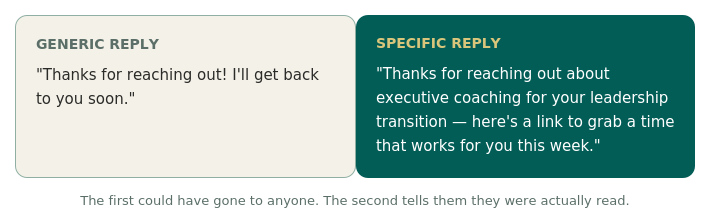
Generic Reply "Thanks for reaching out! I'll get back to you soon."
Specific Reply "Thanks for reaching out about executive coaching for your leadership transition — here's a link to grab a time that works for you this week."
The first reply could have gone to anyone, about anything. The second tells the lead they were actually read, not just received.
4. There's No System Tracking It
Without something tracking who submitted, when, and what happened next, leads live in your inbox — competing with newsletters, client emails, and everything else. It's easy to lose track of who you've followed up with and who's still waiting, especially during a busy week.
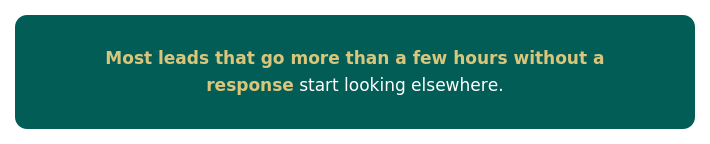
"Most leads that go more than a few hours without a response start looking elsewhere."
The fix: A CRM doesn't need to be complicated — it just needs to reliably show you, at a glance, who's new, who's waiting, and who's fallen quiet.
5. Follow-Up Stops After One Try
A lot of coaches reach out once, hear nothing back, and assume the lead wasn't serious. In reality, people get busy, forget, or need more than one nudge — a single unanswered email isn't usually a "no."
The fix: A short, automatic follow-up sequence over the next week or two catches leads who were interested but distracted, without you having to manually remember to check back in.
6. The Team Doesn't Know What "Done" Looks Like
If you have any help at all — a VA, an assistant, a partner — an unclear process means everyone assumes someone else has it handled. Without a defined path (received → replied → booked → followed up if no response), leads fall into the cracks between people, not because anyone dropped the ball on purpose.
The fix: Write the process down, even briefly. "Here's exactly what happens, in order, every time" removes the guessing.
A Couple Questions I Get a Lot
"Why isn't anyone responding to my leads?"
Usually it's not that nobody's willing to — it's that no single person is clearly responsible for it. Without a defined owner and process, "someone will follow up" quietly becomes "no one does," especially once you have any help at all.
"How fast should I respond to a new lead?"
There's no magic number, but the general pattern holds: the sooner someone hears back after expressing interest, the more likely they are to follow through. Same-day is good. Same-hour is better. Even an instant automated acknowledgment counts as "responding" in the moment that matters most.
"What's a good CRM for a small coaching or consulting business?"
The right one doesn't need to be complicated — it just needs to reliably show you, at a glance, who's new, who's waiting, and who's fallen quiet, plus trigger follow-ups automatically so nothing depends on memory.
"Isn't a personal reply always better than an automated one?"
The goal isn't to replace your personal reply — it's to make sure the lead doesn't go cold while they're waiting for it. A quick automated confirmation buys you time to send the real, personal response without losing them in the meantime.
"How do I stop leads from falling through the cracks with my team?"
Write the process down, even briefly — "here's exactly what happens, in order, every time" — and make sure everyone involved knows who owns each step. Most dropped leads aren't anyone's fault; they're a symptom of an undefined process.
It's Not About Working Faster — It's About Not Losing Track
None of this requires you to be glued to your inbox. It requires a clear, repeatable process for what happens the moment someone raises their hand — so no lead depends on you remembering, noticing, or having a good week.
If you're not sure what's actually happening to your leads after that form gets submitted, that's exactly what our
Free Digital Health Check can help uncover.





































About Vitalix Digital
We help small and medium- sized businesses grow with strategic marketing, high performing websites, and lead generation systems that actually work.
Free Resources

Website Examples