

SEO for Wellness Clinics: Showing Up When Someone Googles "Massage Therapist Near Me"

Most wellness clinics build their client base through referrals and word of mouth — and those channels work. But they also share one limitation: they rely on someone already knowing you exist.
That's exactly where SEO for wellness clinics comes in. Search reaches people at the exact moment they're actively looking for help — often in pain, stressed, or dealing with something they want solved today, not someday.
Why Search Matters More Than Clinics Expect
Someone searching "massage therapist near me" or "chiropractor for lower back pain" isn't casually browsing — they're actively looking to book, often within the next day or two. If your clinic doesn't show up in that search, a competitor's does. This isn't about chasing search trends; it's about being present for a specific, high-intent moment that's already happening, with or without you.
Start With How Real Clients Search
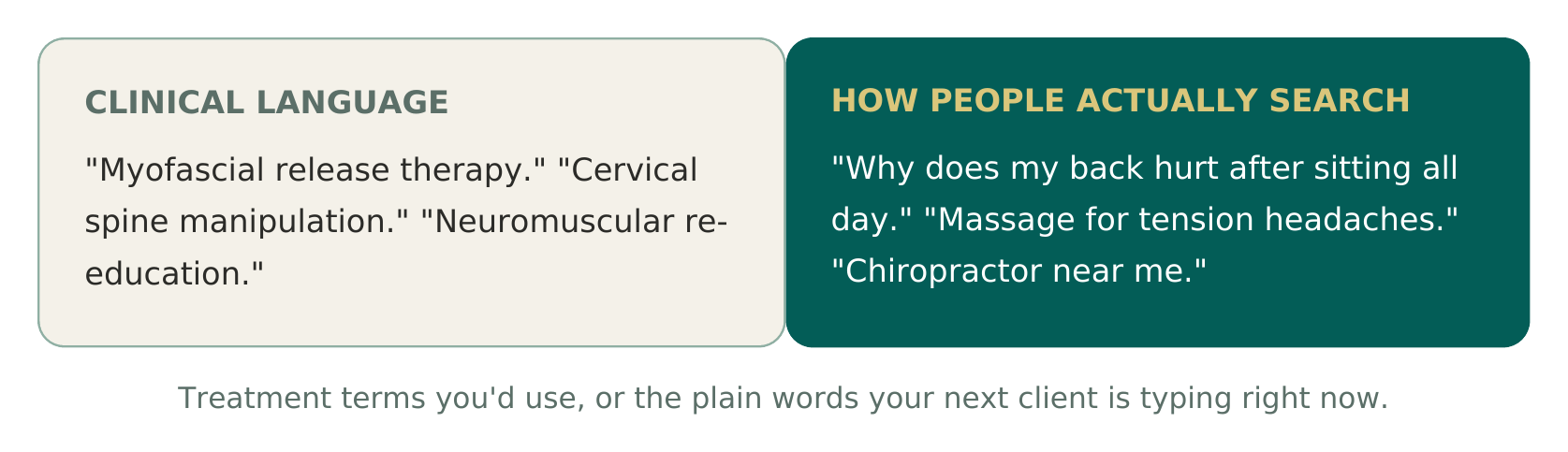
Clinical Language "Myofascial release therapy." "Cervical spine manipulation." "Neuromuscular re-education."
How People Actually Search "Why does my back hurt after sitting all day." "Massage for tension headaches." "Chiropractor near me."
Clinics often assume potential clients search using clinical or treatment-specific terminology. In reality, most people search in plain, symptom-first language — the terms on the right are what actually shows up in Google's search data, not the terms on the left.
The fix: Build content around the specific symptoms and questions your ideal clients actually type into Google, not the treatment terminology you'd use to describe your own services.
Your Google Business Profile Matters More Than You Think
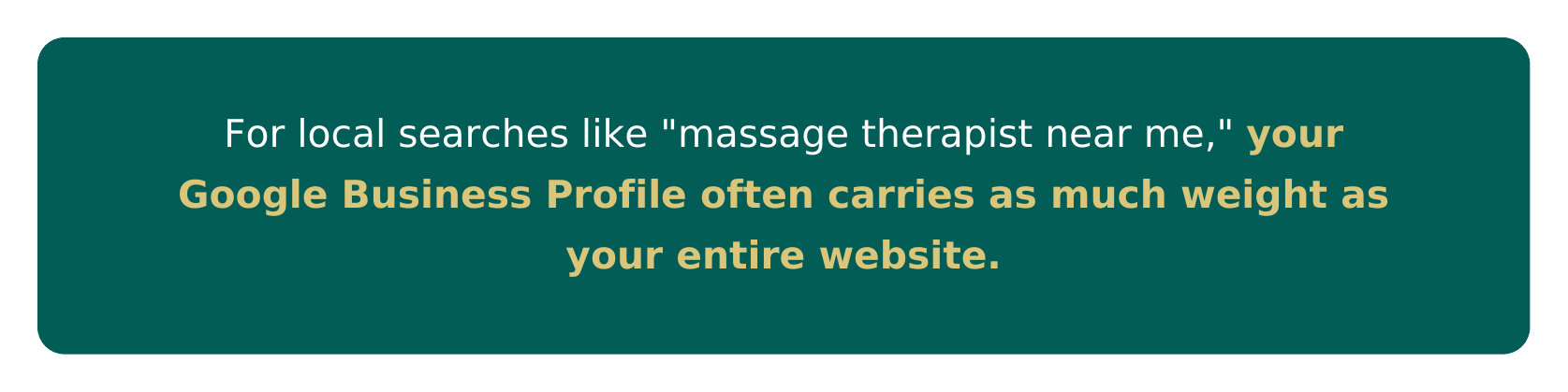
"For local searches like 'massage therapist near me,' your Google Business Profile often carries as much weight as your entire website."
This is where local SEO for wellness businesses lives or dies. For a search like "registered massage therapist in Edmonton," a complete, active profile with accurate categories, updated hours, and real client reviews can be the difference between showing up in local results or not appearing at all — and for clinics specifically, review volume tends to matter even more than it does for other service businesses, since people are trusting you with their body.
The fix: Claim and fully complete your profile, and make gathering reviews a normal part of the post-appointment routine, not an afterthought.
Content That Answers Real Questions
Blog posts, FAQ pages, and resource guides that directly answer the questions your ideal clients are asking do double duty: they help with search visibility, and they demonstrate your expertise to a visitor before they've even booked. A post titled "How to Know If You Need Physiotherapy or Massage" does more search and trust-building work than a generic "About Our Clinic" page.
The fix: Build a small library of content answering the 8–10 questions you're asked most often at the front desk or during a first visit.
Technical Basics Still Matter
Even great content underperforms on a slow, poorly structured, or mobile-unfriendly website. Search engines factor in site speed, mobile experience, and clear page structure — and so do the human visitors those search results send you, especially someone in pain trying to book quickly from their phone.
The fix: These technical elements are usually a one-time setup rather than an ongoing effort, but they're easy to get wrong without some technical background.
FAQ
How long does SEO take to work for a wellness clinic? Most clinics start seeing meaningful movement within three to six months, though local search improvements (like Google Business Profile changes) can show results faster.
How much does SEO cost for a small clinic? It varies depending on how competitive your local market is and how much content work is needed, but it's typically an ongoing monthly investment rather than a one-time project — similar to how referrals take consistent effort, not a single push.
Do I need SEO if most of my clients come from referrals? Referrals are valuable but limited to who already knows you. SEO reaches people actively searching for help who've never heard of you — often people who just moved to the area, switched providers, or started experiencing a new issue.
What's the difference between SEO and Google Ads for a clinic? SEO builds long-term, unpaid visibility that keeps working after you stop actively investing in it; Google Ads gets you visibility immediately but stops the moment you stop paying. Most clinics benefit from SEO as the long-term foundation, with ads as an optional short-term boost during slow periods.
Does SEO matter more for clinics than other small businesses? In some ways, yes — clinic searches tend to be higher-intent (someone in pain or discomfort wants an appointment now), and local pack visibility (the map results) often drives a disproportionate share of bookings compared to organic blog traffic alone.
SEO Is a Compounding Investment
Unlike paid ads, SEO doesn't stop working the moment you stop paying for a specific campaign. Content and search visibility built well tend to keep generating visibility for months or years. It's slower to show results than advertising, but it builds an asset rather than renting attention.
The Takeaway
You don't need to outrank every wellness clinic in the country — you need to show up for the specific, local, symptom-first searches your ideal clients are already making. That's a focused, achievable goal.
If you're not sure where you currently stand in search, that's exactly what our SEO and Hyper Local SEO services are built to assess and improve.






































About Vitalix Digital
We help small and medium- sized businesses grow with strategic marketing, high performing websites, and lead generation systems that actually work.
Free Resources

Website Examples