Your customers don't experience your business. They experience your people.
Most businesses spend a lot of time and money trying to improve the customer experience — better branding, better marketing, a nicer website. What gets overlooked far more often is the team actually delivering that experience. If your employees are overwhelmed, digging for information, doing the same repetitive task for the fourteenth time that day, or trying to remember what needs to happen next — eventually, the customer feels it. They just don't know why.
Here's the thing I keep coming back to with clients:how you take care of your team eventually shows up in how your team takes care of your customers.Your team feels the friction before your customers ever do.
What Friction Actually Looks Like Behind the Scenes
It rarely looks dramatic. It looks like:
Someone monitoring three different inboxes at once
A staff member manually copying website leads into a spreadsheet
Appointment reminders being sent out one at a time
Customer information scattered across email, texts, notes, and whatever software happens to be open
An employee relying on memory to know who still needs a follow-up
Two team members unknowingly replying to the same customer
None of these look like customer experience problems. They look like internal operations problems. But they don't stay internal for long.
Your Customer Never Sees the Cause — Only the Result
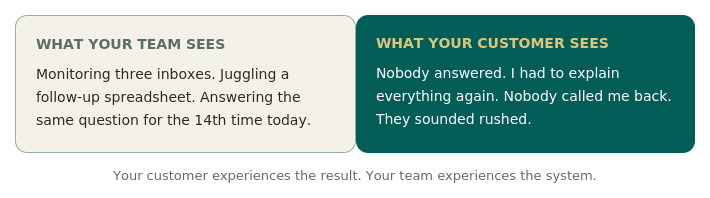
What Your Team SeesMonitoring three inboxes, juggling a follow-up spreadsheet, answering the same question for the 14th time today.
What Your Customer SeesNobody answered. I had to explain everything again. Nobody called me back. They sounded rushed.
Your customer doesn't know your receptionist is watching three inboxes — they just know nobody answered. They don't know their information lives in three separate places — they just know they had to repeat themselves. They don't know someone forgot to update a spreadsheet — they just know nobody followed up.
Your customer experiences the result of your systems. Your team experiences the systems themselves.
Great Customer Service Requires Breathing Room
Good customer service isn't only about hiring nice, capable people — though that matters. It's about whether those people have enough time and mental space left to actually listen, notice details, solve problems, and make someone feel like more than a ticket number.
When someone spends most of their day chasing paperwork and repetitive admin work, there's less of them left over for the human part of the job. This isn't a knock on your team. It's math — attention is finite, and every manual task takes a slice of it away from the customer in front of them.
Supporting your employees isn't just about perks and appreciation, though those matter too. It's also, very practically, about making their jobs possible to do well.
Technology Should Make Your Team Better, Not Busier
This is where a lot of business owners get nervous — technology and automation can sound like "replace the people." That's not the goal. The goal is to remove the unnecessary work sitting between your team and the customer, not the team itself.
A few concrete examples of what that actually looks like:
A CRM keeps customer information and conversation history together, instead of scattered across five places
Automations acknowledge a new inquiry immediately, before a human even opens the email
Appointment systems send confirmations and reminders without anyone remembering to
Workflows flag exactly who needs follow-up, and when
Forms collect information before an appointment instead of during it
Templates cut down repetitive typing while still leaving room for a personal touch
The goal isn't to remove people from the customer experience. It's to remove the unnecessary work from the people providing it.
The Same Business, With the Systems Working
A new inquiry comes in, and the customer knows immediately it was received. The right team member is notified. The lead lands in one central place, not an inbox competing with fifty other things. A follow-up task gets created automatically. When the customer calls back, their information and history are already there — no re-explaining required. Reminders go out without anyone having to remember. After the service, appropriate follow-up happens on its own.
Now your employee gets to spend their energy actually talking to the customer, instead of managing the process around them.
This looks a little different depending on the business. A stylist doesn't have to pause between appointments to answer booking DMs. An office manager doesn't have to hold every open estimate in her head. A new coaching lead gets next steps automatically instead of waiting for the owner to check email between sessions. A wellness studio's routine reminders happen on autopilot, freeing staff for the clients who actually need personal attention. Anyone on a professional services team can pull up a returning client's history instead of asking them to start over.
But Don't Automate Everything
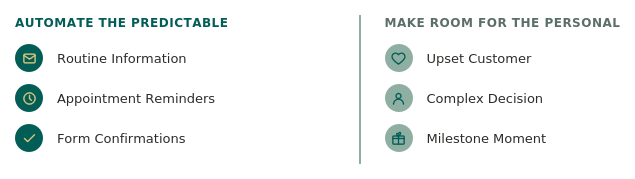
This is the part that keeps all of this human, not robotic. Routine information gets automated. Appointment reminders get automated. A confirmation that a form was received gets automated. But a customer upset about their experience? That's a person. A client facing a complicated decision? That's a person. A loyal customer hitting an important milestone? A personal message means far more than an automated one ever will.
Automate the predictable. Make room for the personal.
A Quick Team Friction Audit
If you want to know where your systems might be quietly working against your team — and your customers — ask yourself:
What does your team repeatedly do manually?
What questions do they answer over and over?
Where do they have to search for information that should already be at hand?
What depends entirely on someone remembering to do it?
Where are customers waiting unnecessarily?
What gets missed when things get busy?
What frustrates your employees most?
What complaints or questions keep coming up from customers?
Then ask the question underneath all of those:could one of your customer experience problems actually be a team or systems problem?
A Couple Questions I Get a Lot
"Won't automation make things feel less personal?"
Done well, it's the opposite — automating the predictable stuff is exactly what frees up the time and attention for the moments that actually need a human. The risk isn't automating too much. It's automating the wrong things.
"We're a small team — is this really worth setting up?"
Small teams often feel friction the most, since there's no extra capacity to absorb the manual work. A simpler system, even a basic one, tends to matter more the smaller your team is, not less.
The Bigger Picture
Marketing doesn't stop the moment someone clicks an ad or submits a form. The website might generate the lead, but everything that happens afterward determines whether that person books, buys, returns, leaves a review, or tells a friend. Your people, your processes, your technology, and your marketing are all part of the same customer journey — not separate departments doing separate things.
Better systems aren't just an operational upgrade. They're an investment in your employees, your customers, and your reputation, all at once.
The best technology shouldn't make a business feel less human. It should give your people more time to actually be human.
If you're curious where technology, automation, or a better workflow could remove friction for your team and your customers, that's exactly the kind of thing ourFree Digital Health Checkis built to uncover.
Before spending more on marketing, find out whether leads, follow-up, messaging, systems, customer experience, or your digital presence need attention first.
A 40-year-old customer today isn't the same consumer a 40-year-old was in 2000. Why understanding how customers have changed matters more than adopting new technology.
I make my clients do something uncomfortable at least once a year: pretend to be their own customer, start to finish. Google your business like a stranger would. Call your own number. Fill out your own contact form. Try to book yourself an appointment. Almost every time, they find at least one thing that's quietly been getting in a customer's way — something they'd never have noticed from the inside. You don't need an outside audit to catch most of this. You just need to walk your own journey, honestly, the way a first-time customer would. Here's the checklist I use. 1. Your Google Listing Search your business the way a stranger would — not by your business name, but by what you actually do ("massage therapist near me," "roofing contractor in [your city]"). Is your listing accurate? Current hours? Recent reviews? A profile photo that isn't five years old? This is often the very first impression a customer has of you, before your website even loads. 2. Your Website Load it on your phone, on regular data, not office wifi. Does it load quickly? Is it obvious within a few seconds what you do and who you help? Can you find a phone number or booking link without hunting? 3. Your Phone Call your own business number. What happens? Does it ring through to a real person, a clear voicemail, or dead air? If someone else usually answers, when's the last time you actually listened to how that call goes? 4. Your Contact Form Fill it out yourself, right now. Is it short enough that a busy person would actually finish it? Do you get any confirmation that it went through, or does it feel like typing into a void? 5. Your Booking Process
How coaches, consultants, and professional service businesses can build email sequences that nurture leads into clients — without sounding like a pitch.
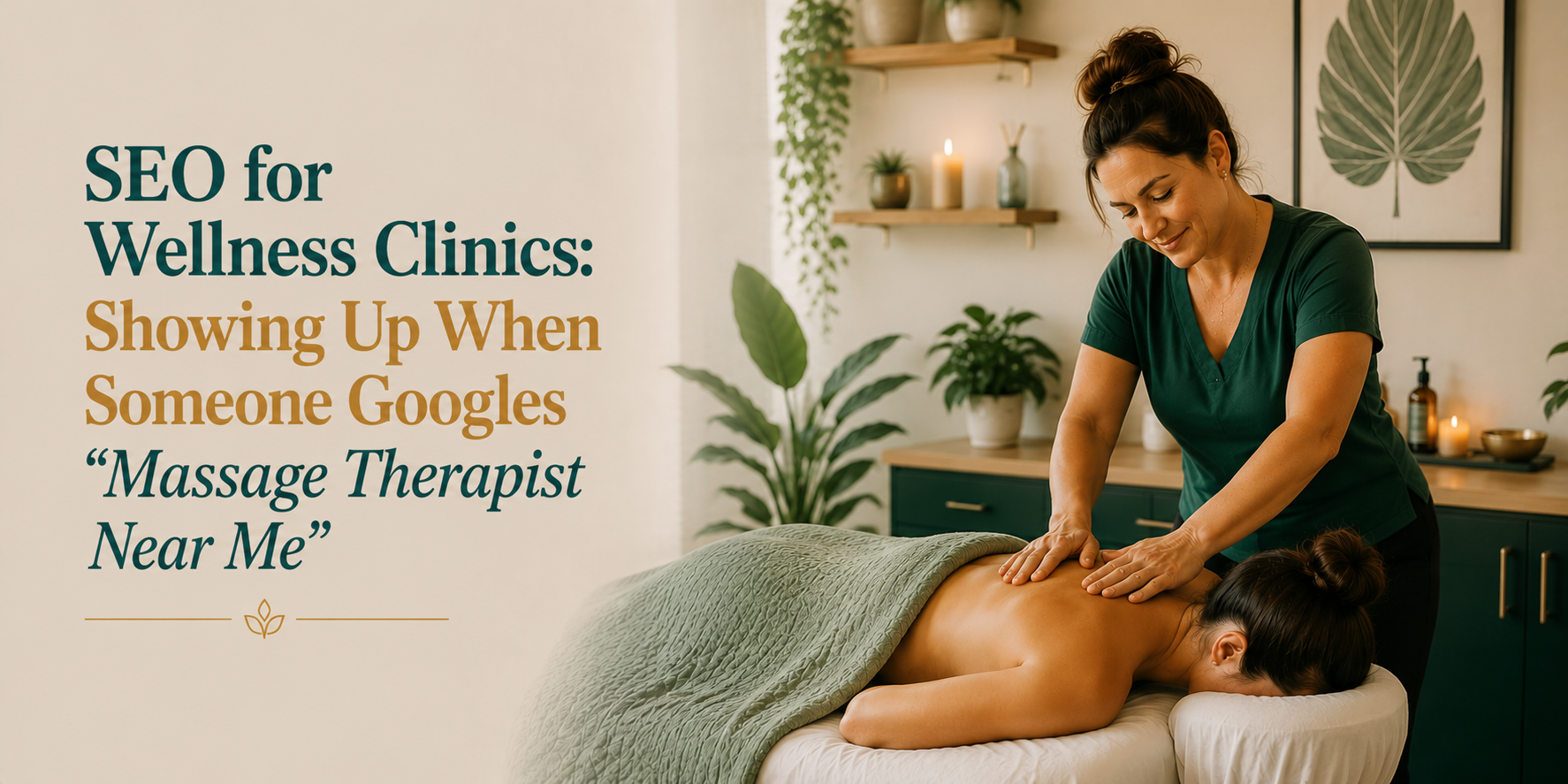
A practical guide to SEO for wellness clinics and appointment-based practices — how to show up in local search when potential clients go looking for help.
Marketing is bigger than advertising. Here are the six parts every business owner should understand — and why promotion works better when the rest come first.
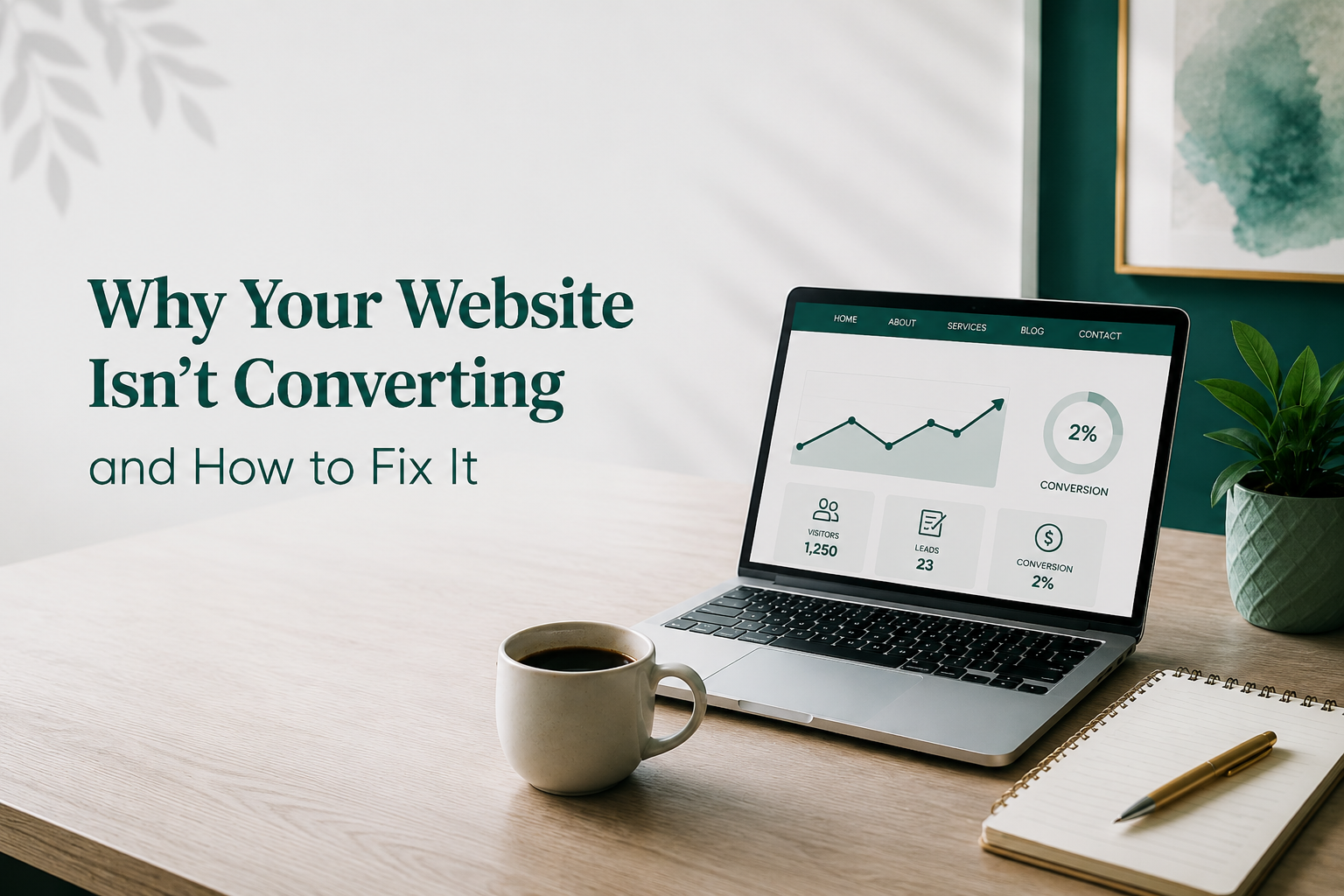
Why Your Website Isn’t Converting? Learn the most common website mistakes businesses make— and how to improve conversions, build trust, and turn visitors into leads.
Discover why personalization is the key to success in wellness marketing. Learn how tailored strategies can boost engagement, build loyalty, and drive conversions for modern wellness brands. Explore real-life examples and actionable tips to get started!
Learn how wellness businesses can leverage health-focused events and holidays to connect with audiences, inspire action, and grow their brands. Explore strategies, key dates, and real-life examples for impactful campaigns.
Discover how to craft impactful campaigns for Heart Health Month that inspire, educate, and connect with your audience. From storytelling to actionable strategies, learn how to make a real difference while growing your brand.
Discover proven lead generation strategies for small businesses to drive consistent growth. Learn how to attract, nurture, and convert leads effectively with practical tips and tools.
Learn how to set an effective marketing budget for your small business. Discover practical tips on allocating funds, maximizing ROI, and balancing DIY and professional marketing strategies. Explore proven methods to create a budget that supports business growth, customer retention, and successful digital marketing campaigns.
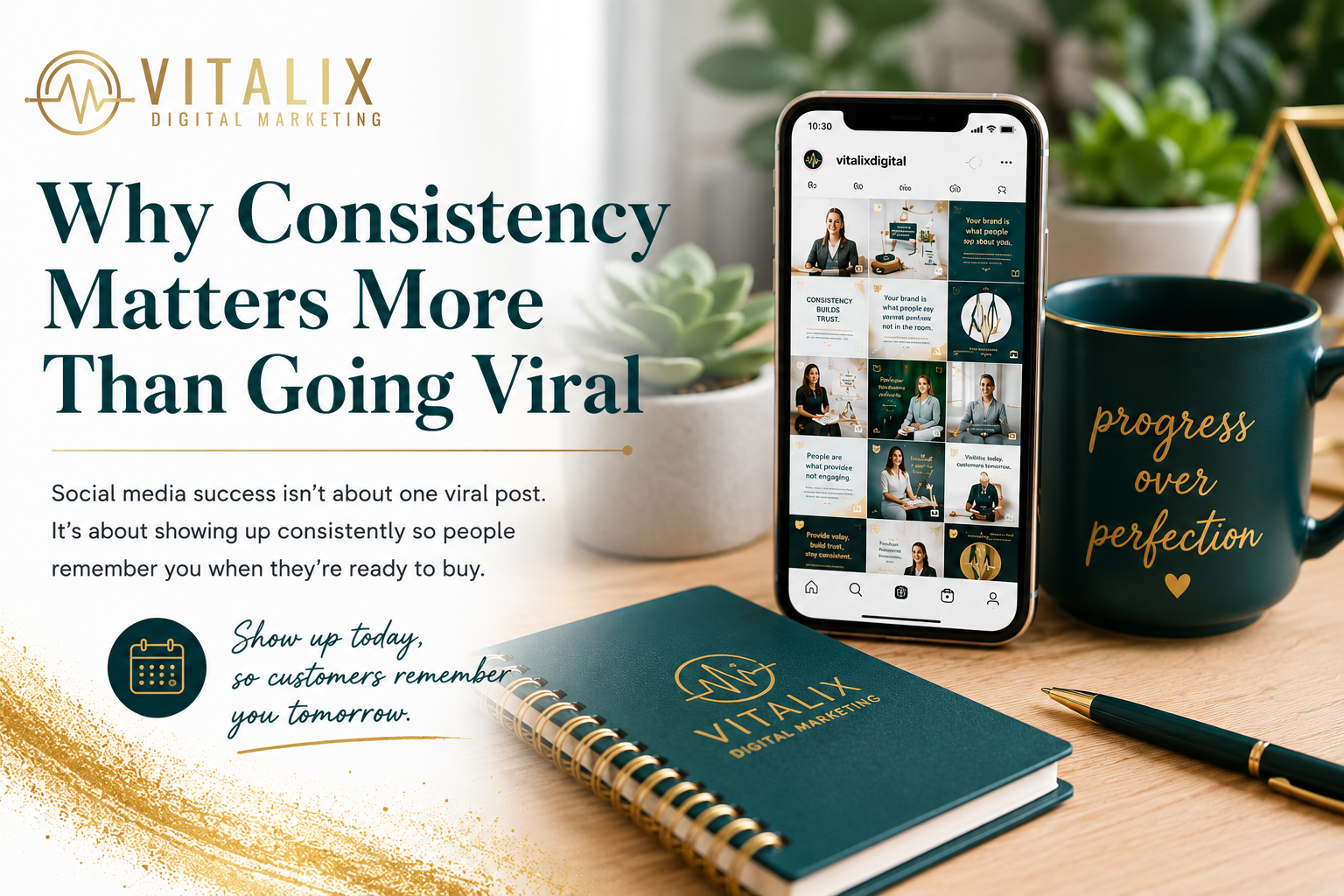
Learn how to create and use a social media calendar to boost engagement, save time, and grow your business. Discover essential tips, tools, and strategies for planning content, scheduling posts, and optimizing your social media presence with SEO-friendly techniques.
Boost your website traffic with proven strategies! Explore SEO, content marketing, social media, email campaigns, and paid ads to attract and retain visitors. Discover how to optimize your website for search engines, create engaging content, and drive meaningful results with our expert tips and tools.
Discover the key differences between organic and direct website traffic, their benefits, and how they impact your business growth. Learn SEO strategies to boost organic traffic and build brand loyalty with direct traffic. Find out which source is better for your goals and how to track and optimize both for maximum results. Unlock insights to improve your website’s performance today!
Learn how to manage your small business's online reputation with practical tips on leveraging reviews, directory listings, and tools like Yext and CRM automation. Boost trust, SEO, and lead generation with effective reputation management strategies.
Boost your small business's online presence with practical tips on digital visibility, SEO, and marketing strategies to drive traffic and increase customer engagement.
Discover how Leads Toolkit CRM can streamline operations, automate tasks, and boost growth for businesses of any size. Learn if it's the right solution for you.
Plan ahead for a successful fall season with digital marketing strategies, from social media and email campaigns to paid ads and post-event follow-ups. Make your fall events count!
In today’s digital landscape, a strong online presence is essential for business success. Search Engine Optimization (SEO) is a powerful strategy that helps increase your website’s visibility on search engines, driving organic traffic and potential customers to your site. But how does SEO work, and how can you effectively implement it for your business? This comprehensive guide explores the core components of SEO, including on-page, off-page, and technical SEO, and provides a comparative analysis of how SEO benefits different types of businesses—restaurants, spas, and construction companies. Discover how SEO can enhance your online visibility, attract new clients, and build credibility, and learn why investing in professional SEO services can lead to significant returns.
Unlock your new website's potential with our comprehensive guide on essential updates and traffic-driving strategies. Learn how to update your digital presence, boost SEO, and attract visitors effectively.
Discover why missing calls sabotages your marketing strategy. Learn how to optimize lead engagement and avoid costly mistakes with effective call handling practices.
Learn how digital marketing tools like AI websites, e-commerce, CRM, SEO, SEM, and social media can help your startup thrive and succeed in a competitive market.
Discover why updating your website is crucial for business success. Learn about the benefits of modern design, improved SEO, and better user experience.
Learn how to optimize your Google My Business profile to boost local visibility, engage customers, and improve SEO. Essential tips and benefits for local businesses.
Discover essential insights into Canadian data privacy laws, including PIPEDA and the proposed Digital Charter Implementation Act. Learn how to ensure compliance and protect your business.
Discover how artificial intelligence can transform your small business marketing. Explore AI tools, benefits, and real-life examples to enhance customer experiences and boost ROI.
About Vitalix Digital
We help small and medium- sized businesses grow with strategic marketing, high performing websites, and lead generation systems that actually work.
Before spending more on marketing, find out whether leads, follow-up, messaging, systems, customer experience, or your digital presence need attention first.
A 40-year-old customer today isn't the same consumer a 40-year-old was in 2000. Why understanding how customers have changed matters more than adopting new technology.
I make my clients do something uncomfortable at least once a year: pretend to be their own customer, start to finish. Google your business like a stranger would. Call your own number. Fill out your own contact form. Try to book yourself an appointment. Almost every time, they find at least one thing that's quietly been getting in a customer's way — something they'd never have noticed from the inside. You don't need an outside audit to catch most of this. You just need to walk your own journey, honestly, the way a first-time customer would. Here's the checklist I use. 1. Your Google Listing Search your business the way a stranger would — not by your business name, but by what you actually do ("massage therapist near me," "roofing contractor in [your city]"). Is your listing accurate? Current hours? Recent reviews? A profile photo that isn't five years old? This is often the very first impression a customer has of you, before your website even loads. 2. Your Website Load it on your phone, on regular data, not office wifi. Does it load quickly? Is it obvious within a few seconds what you do and who you help? Can you find a phone number or booking link without hunting? 3. Your Phone Call your own business number. What happens? Does it ring through to a real person, a clear voicemail, or dead air? If someone else usually answers, when's the last time you actually listened to how that call goes? 4. Your Contact Form Fill it out yourself, right now. Is it short enough that a busy person would actually finish it? Do you get any confirmation that it went through, or does it feel like typing into a void? 5. Your Booking Process
BUSINESS HOURS
Mon-Wed: 9:00 am-7:00 pm
Thur-Fri: 9:00am-4:30pm
Closed on Statutory Holidays
Inquiries are welcome 24/7. Sessions are scheduled by appointment only